How to Cut Hours of Manual Work in Your CMMC Audits
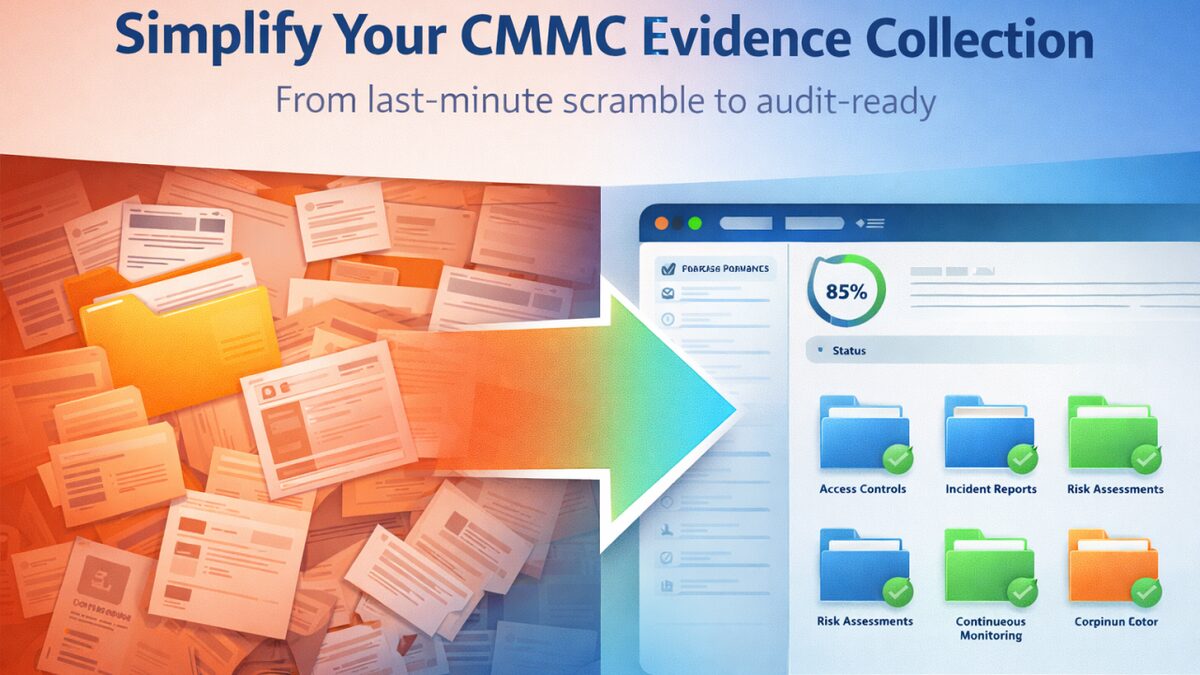
After scoping your environment and mapping your CUI, there’s one step that consistently slows teams down: evidence collection.
It’s where good compliance programs get bogged down in screenshots, spreadsheets, and last-minute scrambling. But it doesn’t have to be that way.
With the right approach, you can turn evidence collection from a time drain into a repeatable, streamlined process.
Practical Tips to Simplify Evidence Collection:
- Start Collecting Early (Not Right Before the Audit) Waiting until the last minute leads to gaps and stress.
-
Build evidence collection into your day-to-day operations
-
Capture artifacts continuously, not reactively
- Standardize What “Good Evidence” Looks Like Not all evidence is created equal.
-
Define what’s acceptable for each control (logs, screenshots, configs)
-
Ensure consistency across teams
💡 If your evidence isn’t clear to you, it won’t be clear to an auditor.
- Centralize Your Evidence Repository Scattered files = wasted time.
-
Use a single, organized location
-
Structure it by control family or requirement
-
Make it easy to retrieve during an audit
- Automate Wherever Possible Manual collection is where most time is lost.
-
Pull logs and reports automatically
-
Use tools to track control status and artifacts
-
Reduce human error and duplication
- Map Evidence Directly to Controls Don’t make assessors guess.
-
Link each artifact to the specific control it supports
-
Clearly label and document everything
- Keep It Audit-Ready at All Times Evidence shouldn’t be a scramble.
-
Regularly review and update artifacts
-
Treat your environment like an audit could happen tomorrow
Quick Evidence Checklist:
✔ Evidence defined for each control
✔ Centralized and organized repository
✔ Automated where possible
✔ Mapped clearly to requirements
✔ Regularly reviewed and updated
CMMC audits don’t have to mean late nights chasing screenshots and digging through folders. When evidence collection is structured and proactive, audits become faster, smoother, and far less stressful.