One of the most common things happening inside compliance programs right now is not failure.
It is expansion.
What starts as a manageable process slowly becomes:
more screenshots more spreadsheets more tickets more evidence requests more manual coordination more meetings more re-validation
And over time, teams begin asking a difficult operational question:
“Why does maintaining compliance seem to require more effort every quarter?”
The environment may not feel dramatically different day to day.
But underneath the surface, complexity keeps accumulating.
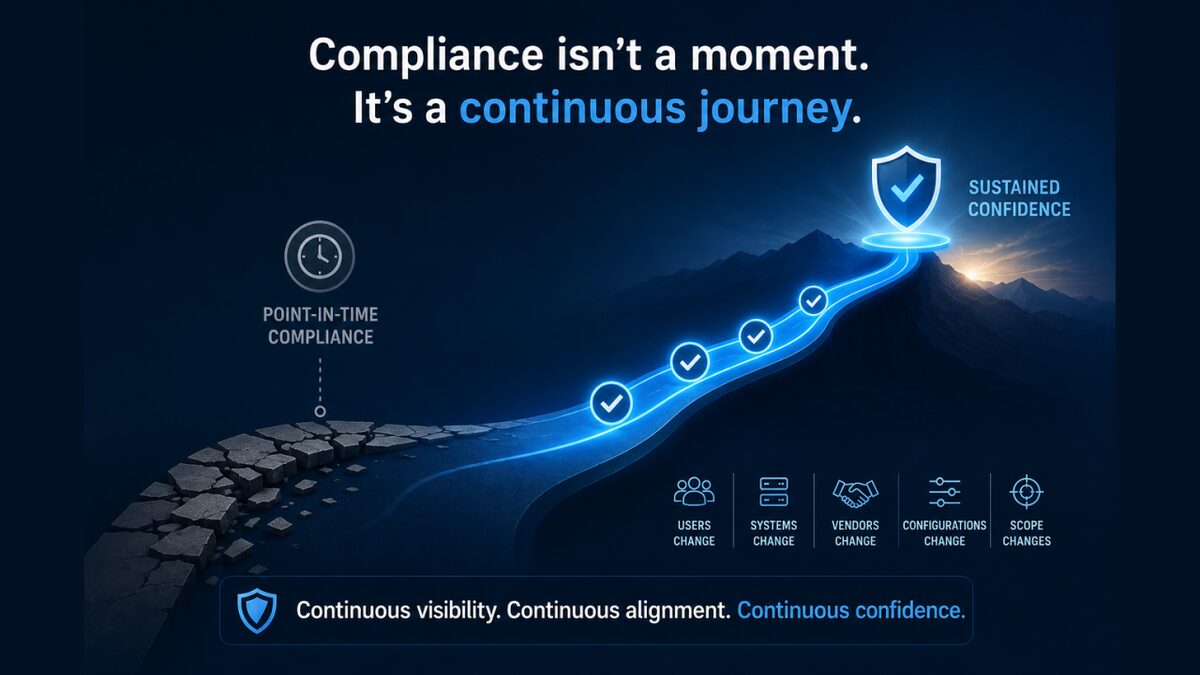
New systems get added. New vendors get introduced. Cloud services expand. Infrastructure changes. Access permissions evolve. Business processes shift.
Yet many compliance processes continue operating almost exactly the same way they did years ago.
Mostly manual. Mostly reactive. Mostly dependent on periodic collection and verification.
That mismatch is becoming increasingly difficult to sustain.
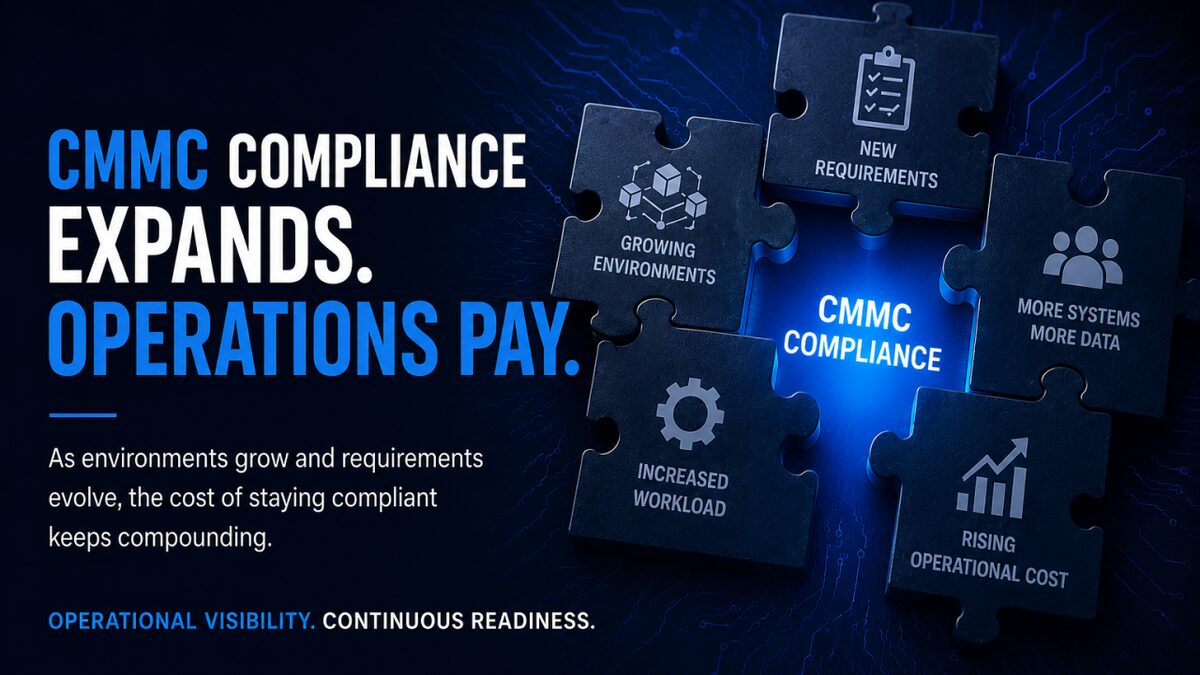
Especially in environments pursuing CMMC where operational alignment has to survive continuous change over time.
Because the challenge is no longer simply implementing controls once.
The challenge is maintaining visibility without operational overhead scaling endlessly alongside the environment.
This is where many organizations start feeling trapped.
Adding more people does not fully solve the issue. Adding more spreadsheets does not solve it. Adding more meetings does not solve it.
The operational burden keeps growing because the process itself was designed around static snapshots instead of continuously evolving environments.
That realization is pushing many organizations to rethink how compliance operations should function long term.
Not as a periodic scramble. Not as an isolated audit exercise. But as an operational capability that maintains awareness continuously as the business evolves.
When designing OCIC, one of the major goals was reducing the compounding operational effort created by traditional maintenance processes.
Not by increasing manual coordination. But by helping organizations maintain ongoing visibility as environments continue changing.
Because compliance effort should not scale endlessly every time the environment grows.
And organizations are starting to recognize that operational sustainability may become just as important as the assessment itself in the years ahead.