Organizations that navigate CMMC assessments well share a few traits: teams that understand both the documentation and the technical implementation, evidence that maps directly to controls, and policies that reflect how the environment actually operates.
At first glance, these look like documentation challenges.
They aren't.
Organizations rarely struggle because they lack documents. They struggle because the documents, evidence, responsibilities, and operational reality tell different stories.
The policy says one thing. The procedure describes another. The MSP assumes ownership of a control. The organization assumes the MSP owns it. The network diagram reflects an environment that no longer exists. The evidence demonstrates a point in time rather than an ongoing reality.
Assessments expose these disconnects — not because assessors are looking for perfection, but because they are trying to understand whether the organization's understanding of itself is accurate.
That distinction matters.
Information is not the same thing as understanding.
Most organizations have policies, procedures, evidence, and diagrams. The question is whether those artifacts connect to form a coherent picture of how the organization actually operates.
Can the organization explain what controls exist, why they exist, who owns them, how they operate, what evidence supports them, and how they continue functioning as the environment evolves?
Organizations that answer those questions confidently experience assessments differently — not because they worked harder before the audit, but because they maintained a clearer understanding of themselves over time.
Readiness is not the accumulation of evidence.
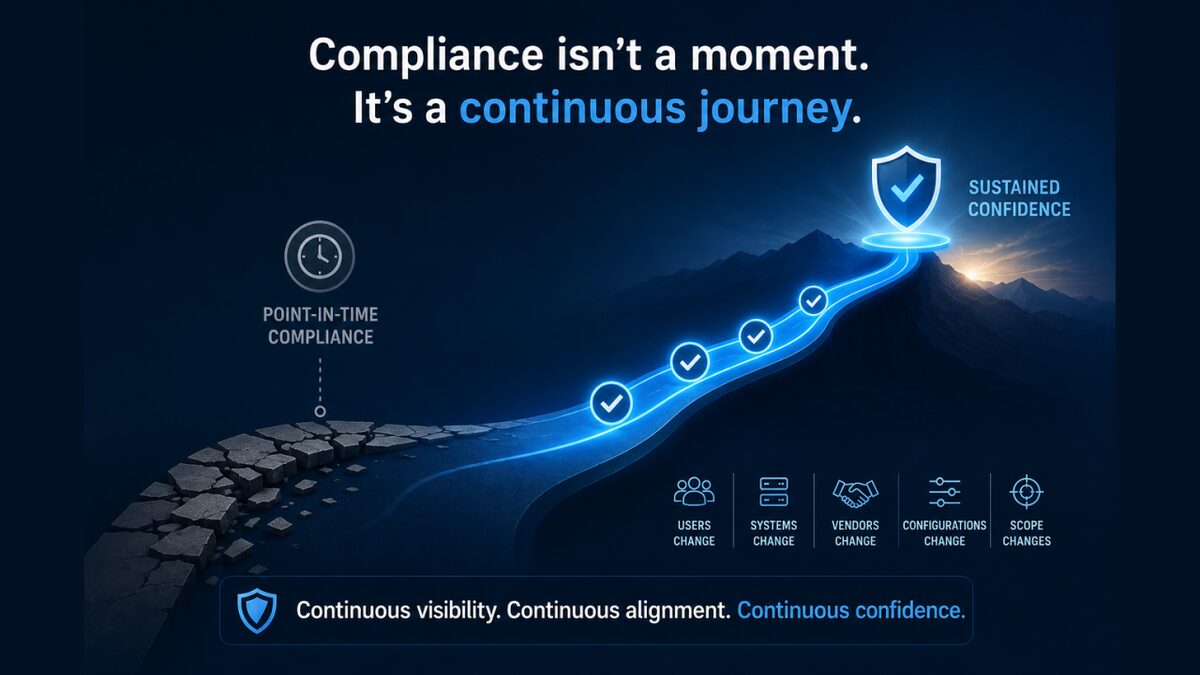
Readiness is sustained confidence that the organization's understanding of itself remains aligned with operational reality.
Assessments don't merely test documentation. They reveal whether understanding and reality still match.
That's the conversation organizations should be having long before the assessor arrives.