CMMC Is Exposing a Bigger Operational Problem
Most organizations think the difficult part of CMMC is preparing for the assessment.
Documentation.
Scoping.
Evidence collection.
Control implementation.
Policy alignment.
Readiness reviews.
And yes, all of that takes significant effort.
But many organizations are starting to discover something after the assessment process begins:
The real challenge is not preparing once.
It is maintaining alignment while the environment continues to evolve.
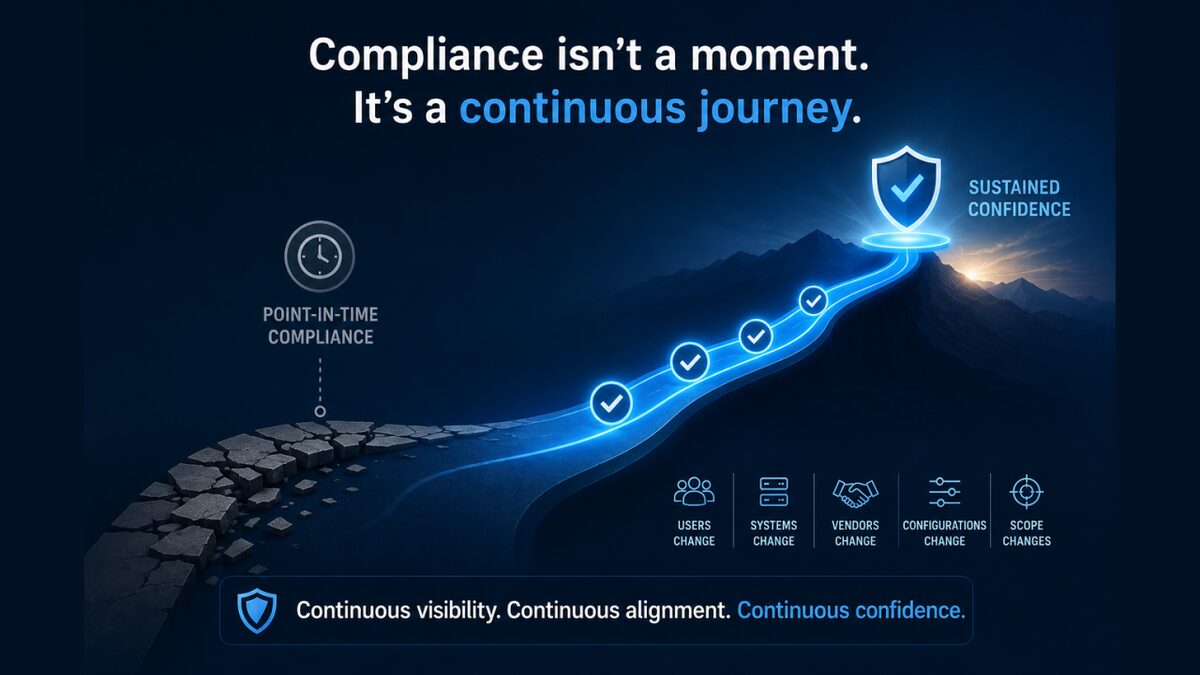
Because the environment does not freeze after certification.
Users change.
Systems change.
Vendors change.
Configurations change.
Scope changes.
But many compliance programs still rely heavily on manual processes built around point-in-time snapshots.
That creates operational friction quickly.
Evidence has to be rebuilt.
Controls have to be re-validated.
Screenshots have to be recollected.
Teams start chasing visibility manually instead of maintaining operational awareness continuously.
Over time, sustaining CMMC alignment can become more operationally difficult than the original implementation itself.
That shift is becoming increasingly visible across the industry.
Organizations are beginning to recognize that compliance is no longer just about passing an assessment.
It is about sustaining operational confidence as the business changes over time.
That requires more than periodic preparation.
It requires continuous visibility into the live environment itself.
When designing OCIC, a major part of our focus has been reducing the manual burden of maintaining CMMC alignment by continuously connecting operational visibility and evidence to the environment as it evolves instead of rebuilding confidence manually every assessment cycle.
Because the organizations that adapt fastest will not just be the ones that achieve compliance.
They will be the ones that can sustain it operationally.