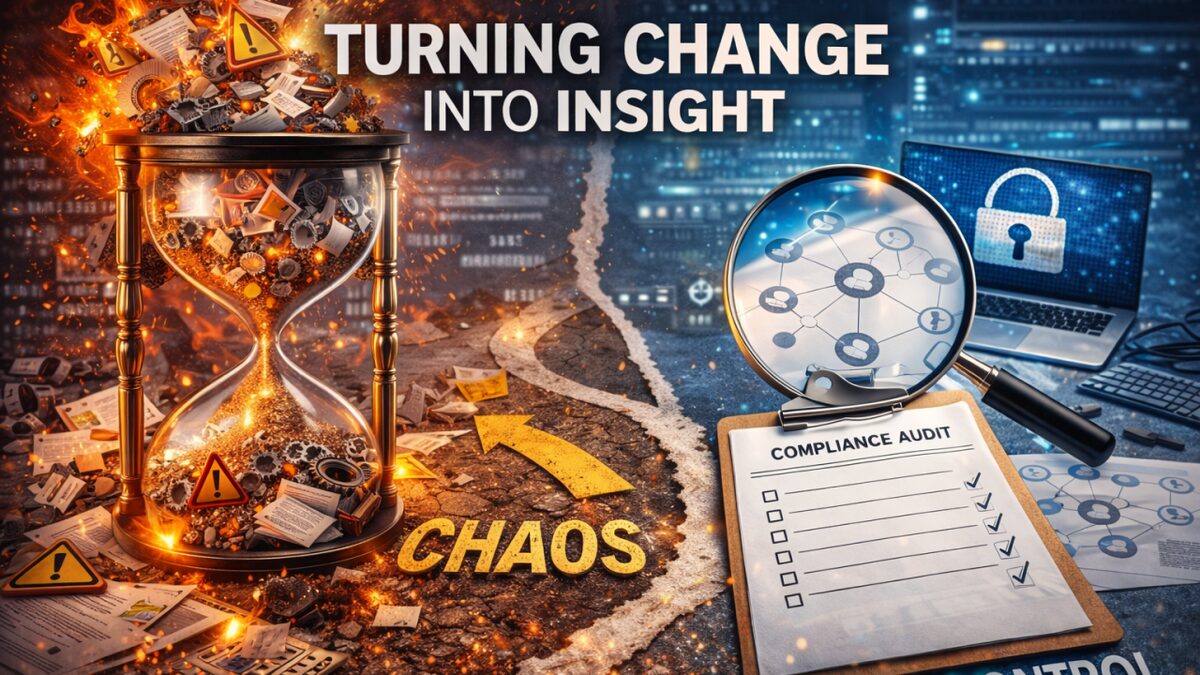
In CMMC environments, unmanaged change isn’t just operational noise—it’s audit risk.
Every organization experiences change: updated procedures, new tools, staffing shifts, revised workflows. Most teams manage the immediate impact. Few manage the governance impact.
But in regulated environments, change is where control drift begins.
A process update that isn’t documented. A system tweak that isn’t reflected in policy. A staffing change that alters access privileges.
None of these feel dramatic in the moment. Over time, they create gaps.
3 Ways to Turn Change into Governance Insight
-
Capture operational changes in real time. Maintain a centralized change log that records process updates, system modifications, policy revisions, and incident-driven adjustments. If it changed, it should be traceable.
-
Assess cross-functional control impact. Before closing a change request, ask: Does this affect access control, incident response, asset management, or documented procedures? Many audit findings begin with siloed decisions.
-
Align documentation with reality. Policies and procedures must reflect how work is actually performed—not how it was performed six months ago. Regular reconciliation prevents control misalignment before it surfaces during audits.
Let's say for example:
A logistics team updates shipment tracking software to improve efficiency. Engineering isn’t notified. The change alters how configuration data is stored. Months later, during an audit readiness review, documentation no longer matches system behavior.
The issue wasn’t technical failure. It was undocumented change.
Where in your organization does change happen informally, and how confident are you that those changes are visible at the governance level?