The Small Scope Advantage in CMMC Compliance
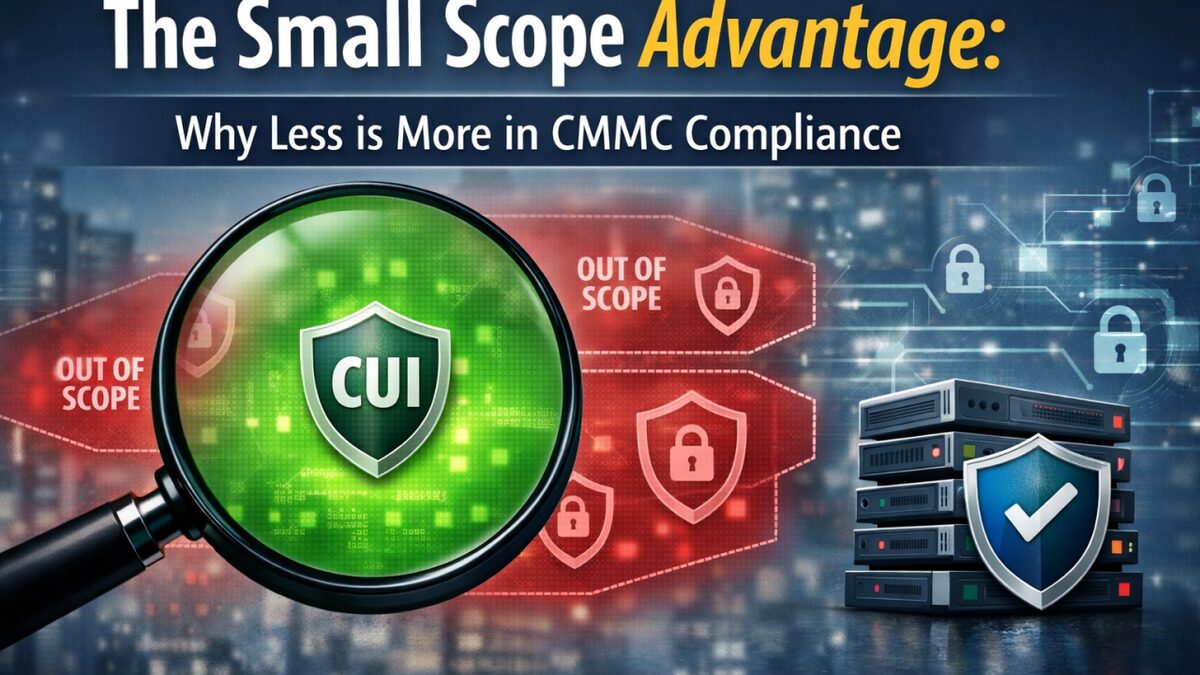
In our last newsletter, we explored how most CMMC failures start with bad scoping. Once you’ve traced where your CUI lives, the next step is just as critical: deciding what to include and what to leave out of your in-scope environment. A smaller, well-defined scope not only reduces audit headaches, it strengthens your security posture.
Main Points / Sections:
1.) Minimize Your Exposure
-
Every system or user in scope increases the number of controls you must implement.
-
Reducing your scope focuses defenses where they matter most and reduces risk.
2.) Map Real CUI Flows, Then Draw the Line
-
Identify every touchpoint, then deliberately exclude systems that don’t store or process CUI.
-
Example: separating HR systems without CUI from your in-scope environment.
- Control Costs and Complexity
-
A smaller scope reduces implementation time, documentation, and audit effort.
-
Less noise = easier for assessors to validate compliance.
4.) Build a Repeatable Process
-
Keep scope decisions documented and revisit regularly—CUI locations evolve.
-
Use checklists or automated tools to track changes in your environment.
A tight, well-defined scope isn’t just good compliance strategy—it’s good security strategy.