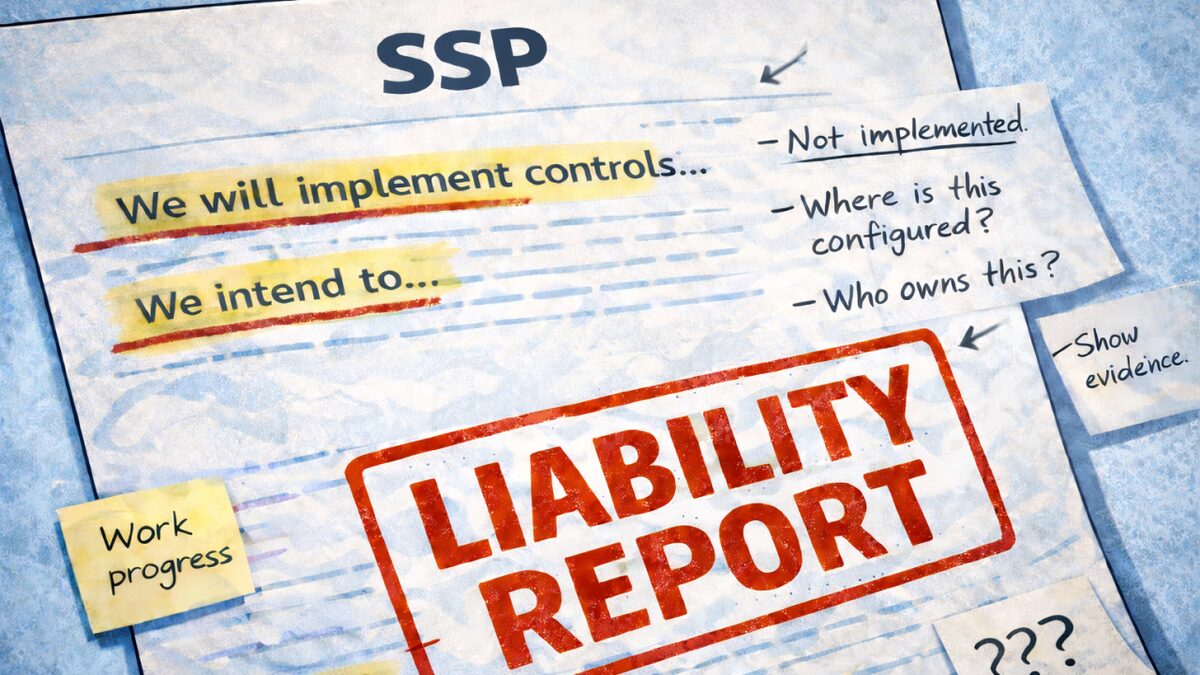
If your System Security Plan reads like a wish list, your assessor already knows.
The System Security Plan is supposed to be the backbone of your CMMC program. It tells the assessor exactly how you protect CUI—what controls are in place, how they work, and who’s responsible.
But most SSPs we review have the same problem: they describe what the organization plans to do, not what it actually does.
An SSP full of future-tense language—“we will implement,” “we intend to deploy”—isn’t a security plan. It’s a to-do list. And assessors treat it accordingly.
A strong SSP does three things well:
-
Describes current-state controls in present tense
-
Maps each practice to specific tools, configurations, and responsible roles
-
Clearly separates what’s implemented from what’s in a POA&M with realistic timelines
The difference between organizations that sail through assessments and those that stall? Their SSP reflects reality. No aspirational language. No copy-pasted NIST descriptions. Just honest, specific documentation of how security actually operates in their environment.
Your SSP should be a mirror, not a vision board.
When’s the last time you read yours with fresh eyes?